Cryptographic Innovations Enhancing Protections in Global Mobile Card Tournaments and Live Dealer Environments
Taylor Krause · Jun 19, 2026
Cryptographic Innovations Enhancing Protections in Global Mobile Card Tournaments and Live Dealer Environments
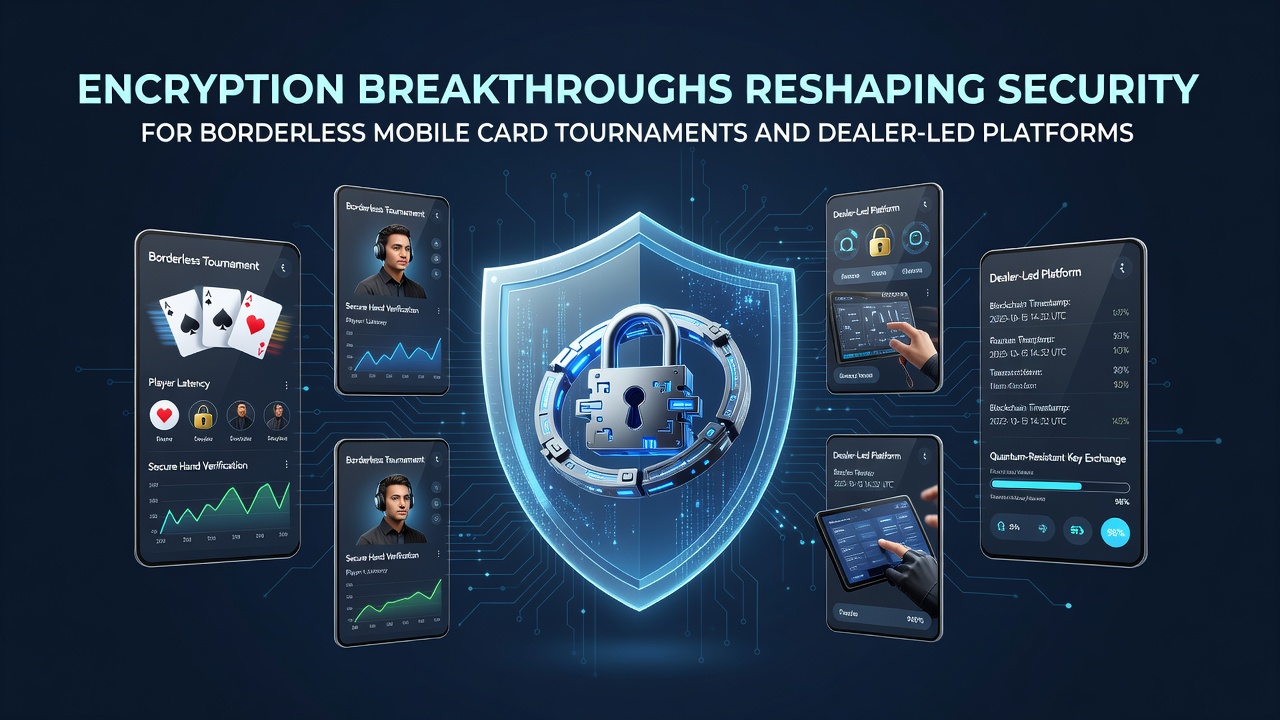
Encryption advancements continue to transform security frameworks that support borderless mobile card tournaments alongside dealer-led platforms, where participants engage across multiple jurisdictions without physical boundaries. Researchers have identified lattice-based cryptography and post-quantum algorithms as key developments that address vulnerabilities in traditional systems, particularly as mobile networks expand reach in June 2026. These methods allow real-time verification of card distributions and dealer actions while maintaining data integrity during high-volume transactions.
Post-Quantum Methods in Mobile Tournament Infrastructure
Post-quantum cryptographic standards now integrate into platforms that host international card events, where data must travel through diverse network environments. The National Institute of Standards and Technology released updated guidelines on post-quantum cryptography that outline implementation steps for organizations managing mobile tournaments, and these protocols resist attacks from quantum computing systems that could otherwise compromise player credentials or game outcomes. Observers note that adoption rates increased sharply after testing phases concluded in early 2026, with several platforms reporting reduced incident reports related to intercepted sessions.
Zero-knowledge proofs further strengthen these systems by enabling verification of game fairness without exposing sensitive details such as hand histories or dealer sequences. Tournament operators apply these proofs during live sessions, which allows independent auditors to confirm compliance across borders while participants retain privacy. Data from industry reports shows that platforms incorporating these proofs experienced measurable declines in dispute resolutions over the first half of 2026.
Securing Dealer-Led Operations Across Jurisdictions
Dealer-led platforms rely on encrypted channels that maintain synchronization between physical dealers and remote players, and breakthroughs in homomorphic encryption permit computations on encrypted data without decryption at intermediate points. This approach supports live card dealing where results must remain confidential until revealed to authorized users, reducing exposure during transmission across international networks. Experts have observed that such techniques align with regulatory expectations in regions outside traditional markets, including frameworks managed by bodies like the European Union Agency for Cybersecurity.
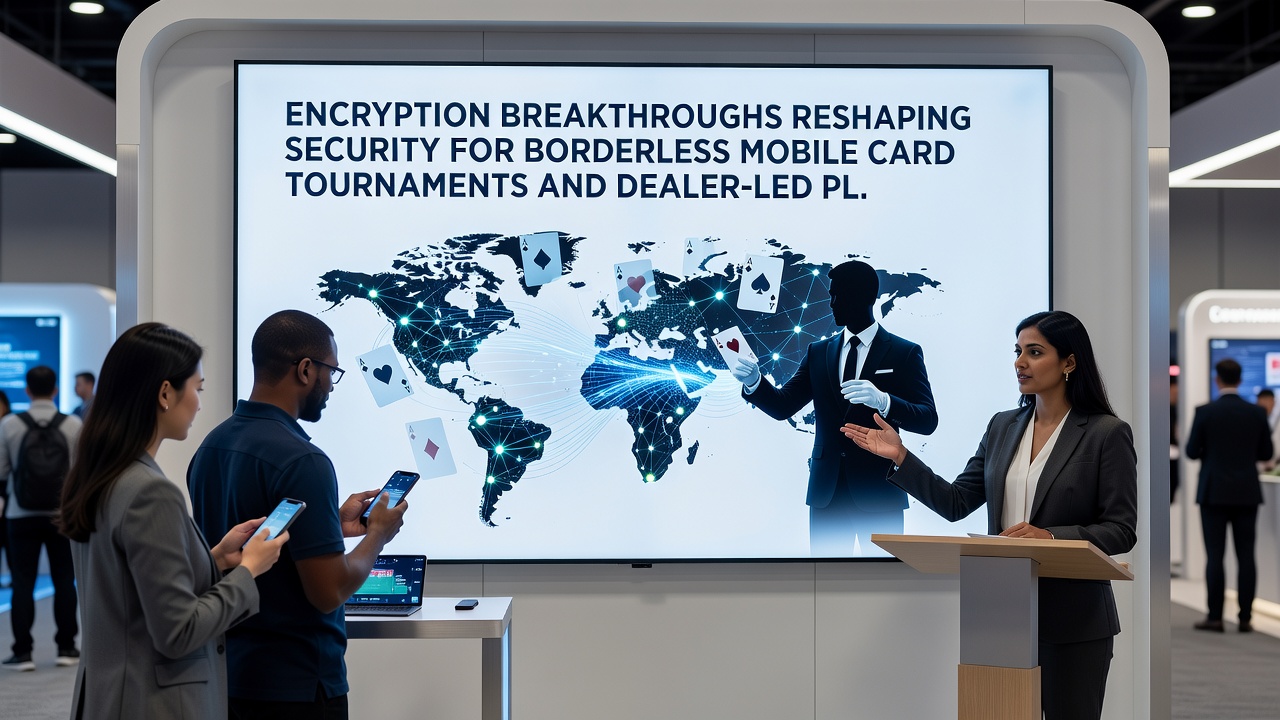
Multi-party computation protocols also appear in dealer environments, where multiple entities process shared data without any single party accessing full information. These protocols facilitate tournament scaling that spans continents, because they distribute trust across nodes located in separate regulatory zones. Figures reveal that platforms using multi-party methods recorded fewer security audits flagging cross-border data flows during the period leading into June 2026.
Integration Challenges and Adoption Patterns
Platform developers face integration hurdles when layering new encryption onto legacy mobile applications, yet solutions involving hybrid cryptographic suites ease transitions by combining established standards with emerging algorithms. Case studies from operators in North America and Asia demonstrate that phased rollouts minimize service interruptions while preserving performance for real-time card play. Those who studied deployment timelines note that full integration often spans three to six months, during which monitoring systems track latency and error rates.
Regulatory alignment plays a central role, because encryption requirements differ by region and affect how tournament data gets stored or transferred. Platforms adapt by selecting modular encryption layers that meet varying mandates without requiring complete system overhauls. Research indicates that organizations following modular designs achieve faster certification in multiple markets compared with those using monolithic approaches.
Future Trajectory for Secure Mobile Gaming
Continued refinement of quantum-resistant techniques promises further gains in both speed and resilience for dealer-led systems, particularly as mobile hardware incorporates dedicated security chips. Industry associations track these developments through collaborative working groups that share implementation benchmarks across operators. Evidence suggests that platforms investing early in these upgrades position themselves to handle increased volumes of borderless traffic without proportional rises in security overhead.
Conclusion
Encryption breakthroughs reshape operational security for mobile card tournaments and dealer platforms by introducing protocols that withstand evolving computational threats while supporting seamless cross-border participation. Adoption of post-quantum methods, zero-knowledge proofs, and homomorphic techniques establishes new baselines for data protection that align with global regulatory landscapes. As standards evolve through 2026 and beyond, these innovations sustain the infrastructure required for secure, scalable events that connect players and dealers worldwide.