Examining How Jurisdictional Shifts Reshape Real-Time Video Interface Integration With Digital Asset Transfers In Skill-Based Card Circuits
Carlo Krause · Aug 21, 2026
Examining How Jurisdictional Shifts Reshape Real-Time Video Interface Integration With Digital Asset Transfers In Skill-Based Card Circuits
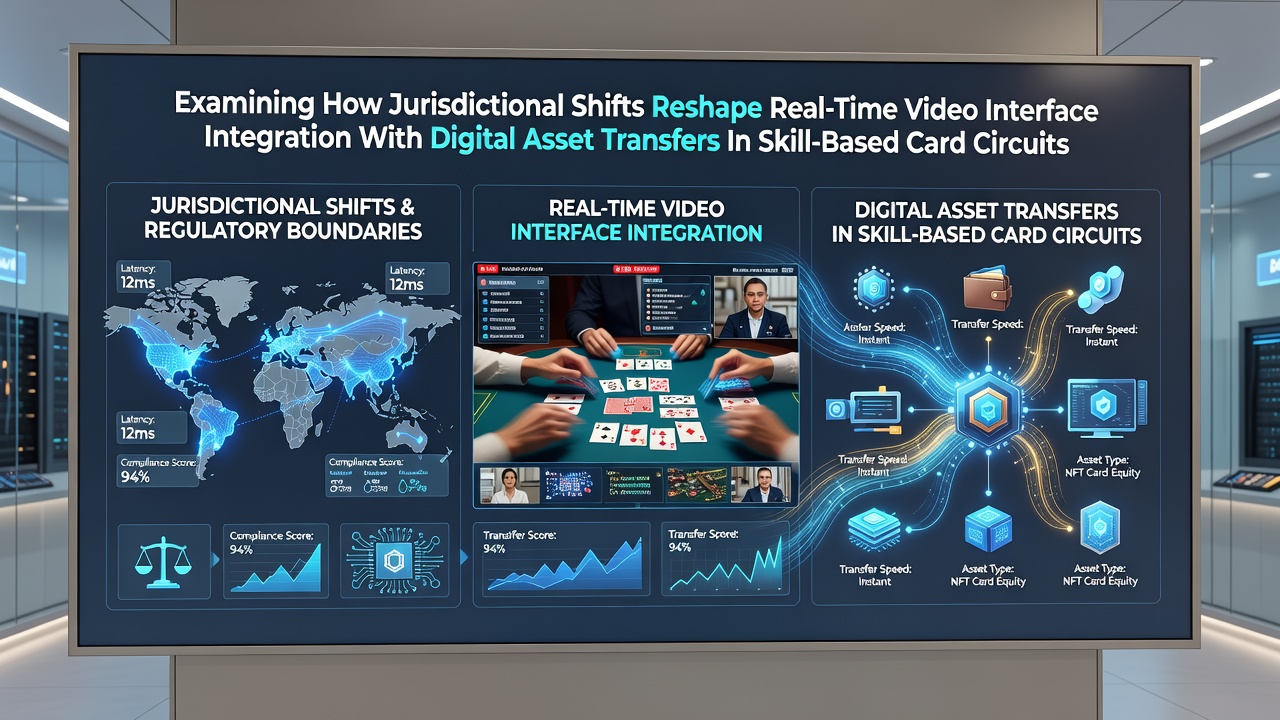
Jurisdictional shifts continue to influence how operators connect real-time video streams with digital asset transfer systems in skill-based card environments, and these changes often require platforms to adjust their technical architectures while maintaining compliance across multiple regions. Regulators in North America and parts of Europe have introduced new licensing frameworks since early 2025, which directly affect the synchronization between live dealer video interfaces and instant wallet or blockchain-based payment rails. Data from industry monitoring groups indicate that at least twelve U.S. states revised their interactive gaming statutes between January and August 2026, each modification carrying specific rules on transaction verification timing and video feed authentication standards.
Regional Regulatory Developments and Their Technical Ripple Effects
Observers note that Canadian provincial authorities implemented updated digital asset guidelines in spring 2026, requiring operators to embed additional verification layers between video capture systems and cryptocurrency settlement protocols. These requirements emerged after consultations with financial regulators and led several platforms to deploy hybrid payment gateways that separate video session tokens from asset transfer ledgers. European jurisdictions, including certain German states and the Netherlands, followed with parallel directives that emphasize end-to-end encryption for both video streams and digital transfers, prompting vendors to redesign their application programming interfaces to accommodate simultaneous compliance checks.
One study released by a European research consortium in July 2026 found that platforms operating across borders experienced a 37 percent increase in development hours dedicated to jurisdiction-specific video and payment integration modules. The same analysis showed that operators who adopted modular architecture designs reduced deployment delays by an average of 19 days when entering newly regulated markets. Those who've studied these patterns recognize that the ball remains in the operators' court regarding how quickly they can reconfigure interfaces without disrupting ongoing tournaments or cash-game sessions.
Integration Challenges Between Video Feeds and Asset Transfers
Real-time video interfaces in skill-based card circuits now routinely incorporate metadata markers that correspond to digital asset transaction states, allowing regulators to audit both the visual record of gameplay and the associated fund movements in a single query. This linkage became necessary after several jurisdictions mandated that transaction confirmations occur within the same session window as the video recording, rather than in separate batch processes. Engineers report that latency tolerances tightened from 800 milliseconds to under 250 milliseconds in many updated specifications, forcing upgrades to both video encoding pipelines and distributed ledger nodes.

Take one platform that expanded into two additional Canadian provinces during summer 2026; developers discovered that aligning video timestamp protocols with provincial blockchain reporting standards required new middleware capable of handling variable block confirmation times. The reality is that different jurisdictions maintain distinct rules about when a digital asset transfer achieves finality, and video interfaces must reflect those distinctions without introducing perceptible delays for players. Research indicates that asynchronous verification methods, once common, now trigger compliance flags in several active regulatory environments.
Case Examples From Skill-Based Card Networks
Multiple operators serving international poker circuits adjusted their systems following new rules issued by the Australian Communications and Media Authority in April 2026, which tied video stream integrity directly to the authorization of digital asset withdrawals. In one documented rollout, the platform introduced per-hand cryptographic hashes visible within the live video overlay, allowing both players and regulators to confirm that each betting action matched a corresponding on-chain record. Similar adaptations appeared in certain U.S. tribal gaming compacts updated during the same period, where video feeds now carry embedded references to approved payment processors.
Those who've examined the resulting data logs observe that transaction reversal rates dropped after these synchronized systems went live, although the precise figures vary by jurisdiction and operator scale. Industry associations have begun publishing comparative reports that track how different regulatory approaches affect integration costs and session continuity, providing operators with benchmarks rather than prescriptive solutions.
Future Adjustments and Ongoing Monitoring
Additional regulatory announcements expected through the remainder of 2026 may further refine requirements around multi-jurisdiction video and payment reconciliation, particularly as more regions consider frameworks for stablecoin usage in gaming environments. Platforms continue to invest in configurable rule engines that can ingest new compliance parameters without requiring full system redeployment. External analyses from organizations such as the National Conference of State Legislatures and academic centers studying distributed ledger applications supply ongoing reference material that helps technical teams anticipate integration adjustments.
Conclusion
Jurisdictional evolution therefore drives continuous refinement in how real-time video interfaces connect with digital asset transfer mechanisms inside skill-based card circuits. The technical responses range from modular software updates to entirely new verification protocols, each calibrated to the specific statutes active in the operating regions. As more regulatory bodies release updated guidance through late 2026 and beyond, operators and technology providers maintain parallel development tracks to preserve both compliance and operational fluidity across interconnected card networks.