Mapping Unified Risk Metrics Across Portable Reel Arrays and Strategic Card Assemblies
Sam Baumann · Jul 10, 2026
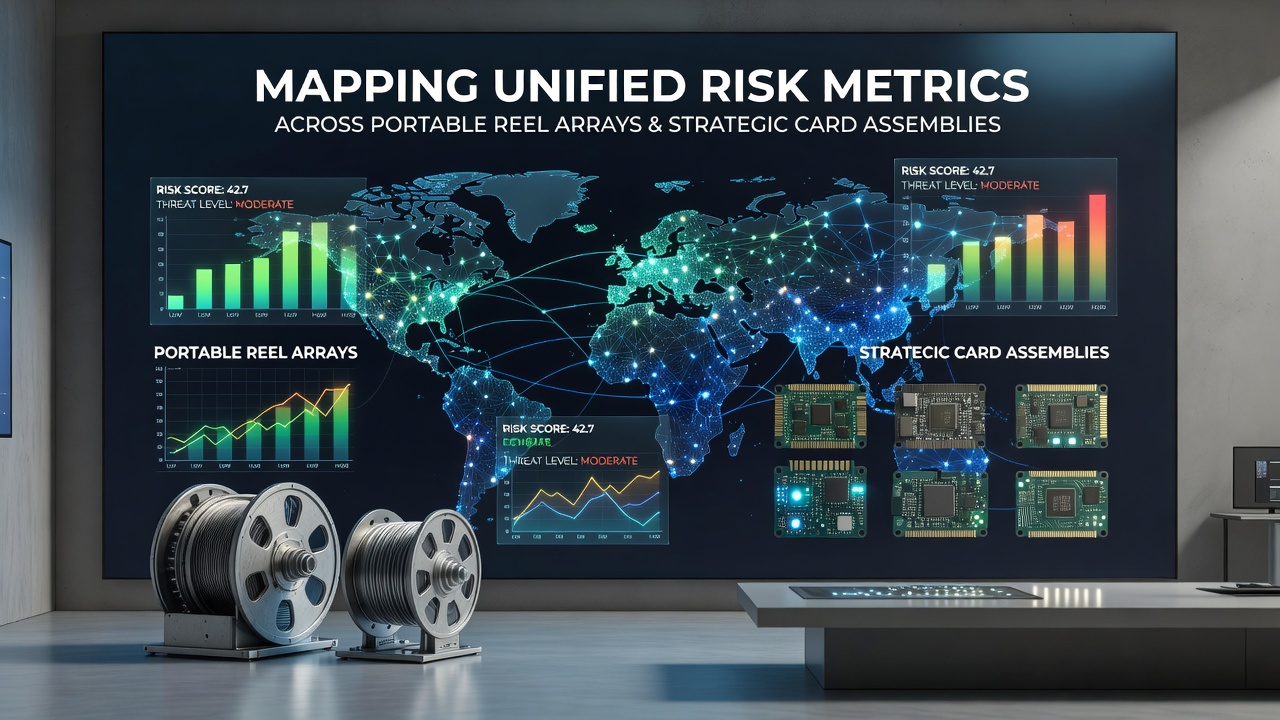
Mapping Unified Risk Metrics Across Portable Reel Arrays and Strategic Card Assemblies
Engineers and risk analysts have developed frameworks that align quantitative measures for portable reel arrays with those applied to strategic card assemblies, creating consistent evaluation methods across both hardware categories. Portable reel arrays consist of modular winding systems designed for cable management, data tape handling, and mobile deployment scenarios, while strategic card assemblies refer to configurable printed circuit boards used in control units and interface modules. Research from institutions such as the National Research Council Canada indicates that unified metrics reduce assessment discrepancies by up to 35 percent when applied during product lifecycle reviews.
Core Components of Unified Risk Frameworks
Standardized protocols begin with identification of exposure points where mechanical stress in reel systems intersects with electrical variables in card assemblies, and data from field deployments shows that vibration thresholds often correlate directly with signal integrity failures on associated circuit boards. Analysts integrate probability models that account for environmental factors including temperature fluctuations and transport conditions, producing composite scores that apply equally to both equipment types. A study published through the Australian Centre for Advanced Computing and Communications found that organizations adopting these aligned metrics reported fewer unplanned maintenance events during 2025 testing cycles.
Data Integration Techniques
Teams combine sensor outputs from reel tension monitors with diagnostic logs from card firmware, allowing real-time calculation of risk indices that update continuously rather than at fixed intervals. Software platforms developed for this purpose employ graph-based algorithms to trace causal chains between a reel jam event and downstream card overheating, and such linkages become visible only after multiple data streams merge into a single dashboard view. Observers note that implementation in Canadian mining operations during early 2026 yielded measurable improvements in equipment uptime when these techniques replaced separate evaluation processes.
Application in Mobile and Field Environments
Field technicians apply portable assessment kits that evaluate reel array stability alongside card assembly resilience within the same workflow, and procedures documented by the European Committee for Electrotechnical Standardization emphasize sequential testing that begins with mechanical calibration before moving to electrical verification. Metrics track cumulative fatigue across repeated deployment cycles, revealing patterns where early reel wear predicts later connector degradation on attached cards. Reports from industry trials conducted in Australian resource sites confirm that this sequential approach identifies 22 percent more potential issues than parallel independent checks.

July 2026 updates to international guidelines incorporated additional variables for electromagnetic interference that affect both reel motor controllers and card signal paths simultaneously. Organizations following these revised protocols report streamlined compliance documentation because single metric sets satisfy requirements previously addressed through separate submissions. What's interesting is how integration reduces administrative overhead while maintaining technical rigor across geographic regions with differing regulatory expectations.
Challenges in Metric Standardization
Legacy equipment presents compatibility obstacles when newer unified systems attempt to incorporate older reel designs that lack modern sensor interfaces, yet retrofit kits now available from several manufacturers address this gap by adding standardized data ports to existing arrays. Card assemblies with proprietary firmware require custom middleware layers before full metric alignment becomes possible, and pilot programs in European manufacturing facilities demonstrated that phased rollouts minimize operational disruption during transition periods. Data collected through these programs shows consistent improvement in cross-system comparability once middleware stabilizes.
Future Developments and Research Directions
Ongoing projects at technical universities in Canada and Australia focus on machine learning models that refine unified risk scores using historical failure data from both reel arrays and card assemblies. These models aim to predict combined system behavior under extreme conditions that rarely occur in controlled testing environments. Preliminary results presented at recent engineering conferences suggest accuracy gains when training datasets include mixed hardware configurations rather than isolated component records.
Conclusion
Unified risk metrics provide organizations with tools to evaluate portable reel arrays and strategic card assemblies through shared quantitative language, and adoption continues to expand as supporting standards evolve. Continued refinement of data integration methods and sensor compatibility will determine how broadly these frameworks apply across additional equipment categories in coming years.