Rhode Island Files Suit Against Kalshi and Polymarket as Federal Agencies Enter the Fray
Carlo Krause · May 29, 2026

Rhode Island Files Suit Against Kalshi and Polymarket as Federal Agencies Enter the Fray
Attorney General Peter Neronha initiated legal action on May 21, 2026, by filing suit in Rhode Island state court against the prediction market platforms Kalshi and Polymarket, and the complaint centers on allegations that sports-related event contracts function as illegal sports betting under state law while bypassing established gambling regulations.
Kalshi responded on the same day with a preemptive federal lawsuit against the state, and this move set the stage for overlapping jurisdictions that would soon draw in federal regulators as well.
Details of the State Court Filing
The Rhode Island complaint describes the platforms' offerings as event contracts tied directly to sports outcomes, and it argues these products meet the definition of sports betting prohibited under existing state statutes without the licensing and oversight required for regulated gambling operations.
State officials contend that such contracts allow users to take positions on athletic events in ways that parallel traditional sports wagers, yet the platforms operate outside the frameworks that govern licensed betting activities within the state.
Kalshi's Preemptive Federal Response
Kalshi moved quickly on May 21, 2026, to file its own action in federal court, and the company sought to block Rhode Island from enforcing its gambling laws against the platform's event contracts while asserting that federal authority should take precedence in this area.
The filing positioned the dispute as one involving interstate commerce adn federal regulatory structures rather than purely local gambling enforcement, and observers noted this approach reflects broader strategies used by prediction market operators when facing state-level challenges.
CFTC Enters with Its Own Lawsuit on May 28
On May 28 the U.S. Commodity Futures Trading Commission filed suit against Rhode Island in federal court, and the agency's complaint seeks to establish federal jurisdiction over the contested markets by classifying them as derivatives or swaps subject to CFTC oversight rather than state gambling rules.
The CFTC action directly addresses the tension between state regulators and federal authorities, and it highlights how prediction markets have expanded amid ongoing questions about which level of government holds primary regulatory power in the evolving U.S. betting environment.
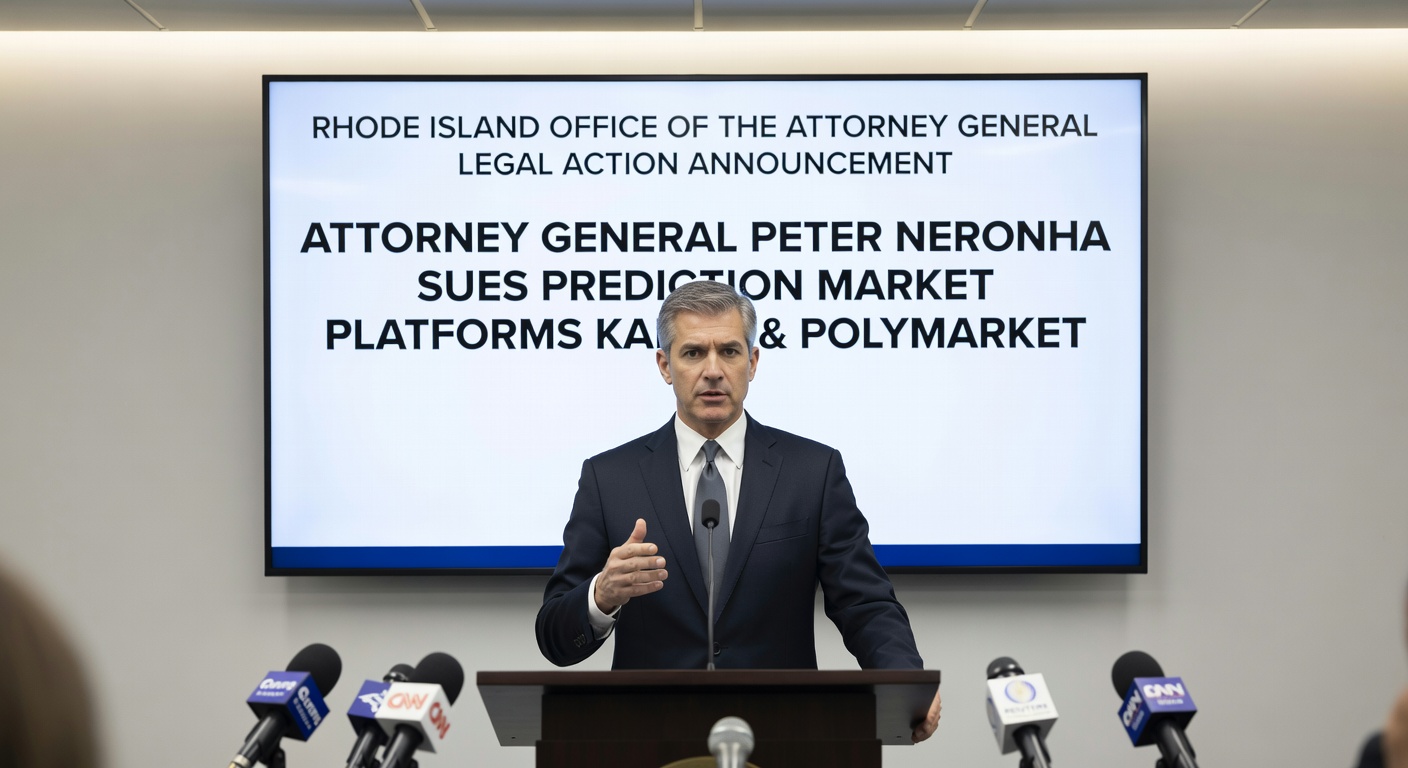
Those following the case point out that the sequence of filings, beginning with the state suit on May 21 and followed by Kalshi's federal response the same day plus the CFTC lawsuit one week later, illustrates the rapid escalation typical when prediction platforms encounter resistance from state attorneys general.
Context of Expanding Prediction Market Activity
Prediction market platforms have grown by offering contracts on a range of events including sports outcomes, and companies like Kalshi and Polymarket have positioned these products as distinct from traditional sports betting through their structure as event contracts or derivatives.
State regulators in Rhode Island maintain that the sports-focused contracts still constitute gambling activity requiring compliance with local licensing, and the May 2026 filings represent one state's effort to draw clear lines around what counts as regulated betting versus federally supervised financial instruments.
Meanwhile the CFTC's intervention on May 28 underscores federal interest in asserting control over markets that trade event-based contracts, and this development adds another layer to the jurisdictional questions already raised by Kalshi's preemptive filing.
Conclusion
The events of May 2026 in Rhode Island demonstrate how quickly disputes over prediction market contracts can move from state court filings to federal litigation involving multiple agencies, and the overlapping lawsuits filed between May 21 and May 28 highlight the complex regulatory landscape facing platforms that blend sports event contracts with broader market offerings. According to Attorney General Neronha sues Kalshi and Polymarket for unlawfully conducting sports gambling in Rhode Island, the core disagreement remains whether these products fall under state gambling prohibitions or federal derivatives rules, and the resolution of these cases will likely shape future interactions between state and federal oversight in this sector.